
Sign Language Interpreter Services
In Austin, Texas & Nationwide with VRI
What we offer
We provide a wide range of services tailored for the Deaf community, ensuring effective communication and accessibility for everyone
On-site
Looking for a certified ASL interpreter for in-person meetings? This is the preferred choice for many clients in Austin and Central Texas.
VRI
Video Remote Interpreting connects you with a certified ASL interpreter via platforms like Zoom, Facetime, or Teams, enabling access from anywhere with high-speed internet.
ASL Video
3 Bridges Austin specializes in ASL video production, featuring certified interpreters, Deaf talent, captions, voiceovers, and expert consulting. We deliver accessible and customized media solutions.
CART
3 Bridges offers CART (Communication Access Realtime Translation) services that convert speech to text in real time, ensuring Deaf and hard of hearing individuals receive textual support.
How to request an ASL interpreter?
We ensure that the process of requesting our services, whether it’s for an ASL interpreter, VRI, or CART services, is as effortless as possible. Our goal is to guarantee equal access for Deaf and hard of hearing customers.
Complete form
Confirm appointment
Keep notified
Trusted by clients and companies throughout the country











About us
For over three generations, 3Bridges has been dedicated to building understanding and accessibility between Deaf and hearing communities, carrying forward a legacy that began in the 1950s.

Lloyd and Margie Lee Bridges begin their careers in the printing industry and raise their children in an all-deaf family.
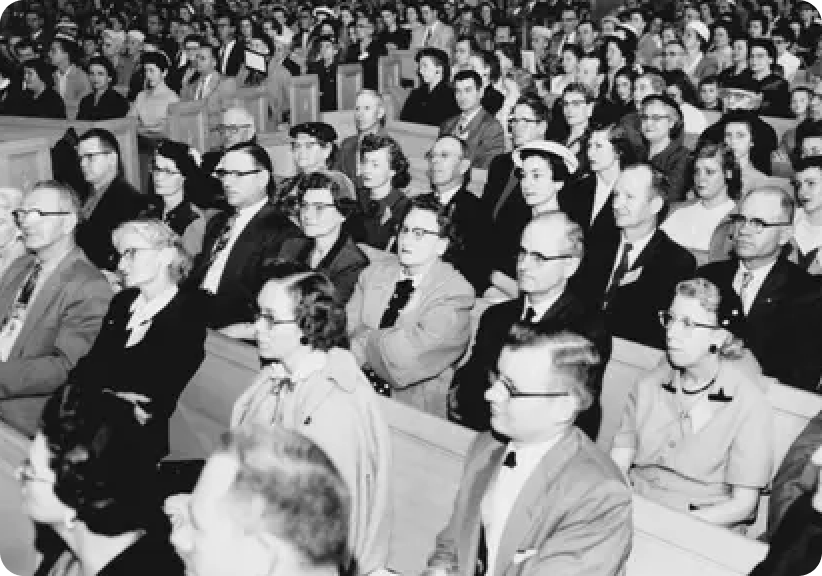
Involvement in church service, first steps in training others to become sign language interpreters.
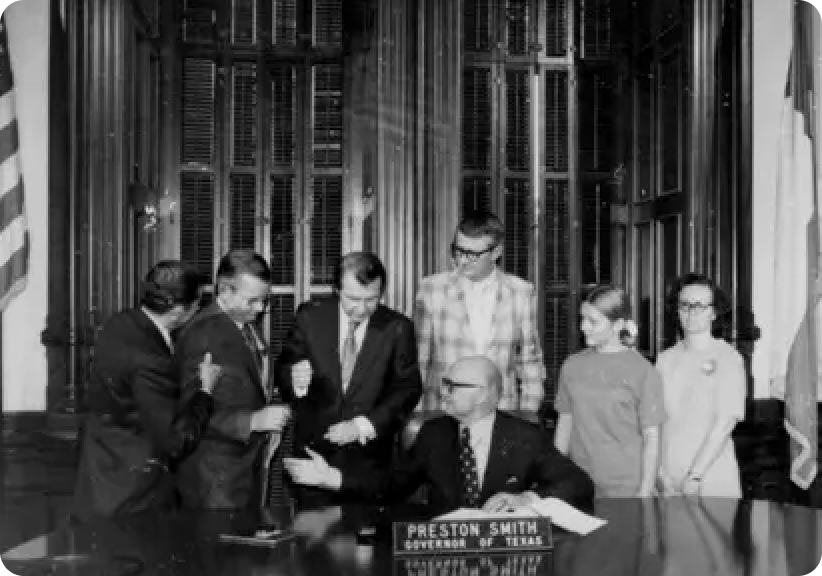
Signing of HB 1293. The Texas Commission for the Deaf is established. (Photo with Governor Preston Smith).
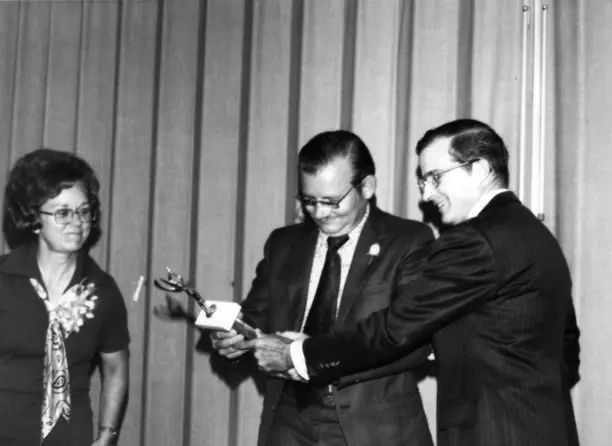
Expansion of the community, participation in organizations, promotion of access to education and services.
Your questions answered in one place
Who is required to pay for interpreting services?
Businesses and community organizations are required to cover the expenses associated with sign language interpreting services. According to the Americans with Disabilities Act (ADA), “Title II entities (State and local governments) and Title III entities (businesses and nonprofit organizations that serve the public) communicate effectively with people who have communication disabilities. The goal is to ensure that communication with people with these disabilities is equally effective as communication with people without disabilities.”
While simple communication, such as brief interactions between a Deaf customer and a store clerk, can sometimes be facilitated through written notes or gestures, the presence of an interpreter is essential whenever vital information is being conveyed. This ensures that information is equally accessible to all parties involved, thus safeguarding effective communication.
What is the ADA (Americans with Disabilities) Act?
The ADA, or Americans with Disabilities Act, is a civil rights law in the United States that prohibits discrimination against individuals with disabilities in all areas of public life, including jobs, schools, transportation, and public and private places open to the general public. The ADA ensures that people with disabilities have the same rights and opportunities as everyone else. It consists of five titles covering different aspects of public life, including employment, public services, public accommodations, telecommunications, and miscellaneous provisions. The ADA was signed into law in 1990 and has since been amended to expand protections and accommodations for individuals with disabilities.
What is the appropriate way to refer to a person with hearing loss?
When referring to a person with hearing loss, it’s essential to prioritize respectful and person-first language. Some appropriate terms include “Deaf,” “hard of hearing,” or “person who is deaf or hard of hearing.” It’s essential to use language that acknowledges the individual first and foremost rather than defining them solely by their hearing status. Avoid terms that may be considered outdated or offensive, such as “hearing impaired,” “handicapped,” or “mute.” Always follow the individual’s preference for how they wish to be referred to, as preferences may vary among individuals.
Why does my company need to provide an interpreter(s)?
Your company may need to provide an interpreter(s) for several reasons:
- Legal Compliance: The Americans with Disabilities Act (ADA) mandates that businesses and organizations ensure effective communication with individuals with communication disabilities. Providing interpreters when necessary helps your company stay compliant with ADA regulations.
- Inclusivity: Access to communication is a fundamental right for all individuals, including those who are Deaf or hard of hearing. By offering interpreting services, your company demonstrates a commitment to inclusivity and accessibility for all customers, clients, and employees.
- Enhanced Communication: Interpreters facilitate clear and accurate communication between individuals who use sign language and those who do not. This ensures that important information is conveyed accurately and comprehensively, reducing the risk of misunderstandings or miscommunications.
- Customer Satisfaction: Providing interpreters demonstrates a commitment to meeting the diverse needs of your customers or clients. This can enhance customer satisfaction and loyalty, as individuals with communication disabilities feel valued and respected by your company.
- Legal Protection: In some cases, failing to provide appropriate accommodations, such as interpreters, can lead to legal liabilities, including discrimination lawsuits. By proactively providing interpreters when needed, your company mitigates the risk of legal disputes and protects its reputation.
Overall, providing interpreters aligns with principles of accessibility, inclusivity, and legal compliance, benefiting both your company and the individuals it serves.
When do I need to use an interpreter?
You may need to provide an interpreter in various situations, including:
- Meetings and Conferences: Any gathering where individuals who are Deaf or hard of hearing need to participate and understand the information being conveyed.
- Medical Appointments: Effective communication between healthcare providers and patients who use sign language is essential for accurate diagnosis and treatment.
- Legal Proceedings: Providing interpreters in courtrooms or during legal consultations ensures that individuals who are Deaf or hard of hearing can fully participate in legal proceedings. Sign Language interpreters in the courtroom must obtain a higher level of certification.
- Educational Settings: Interpreters are necessary in classrooms and academic settings to facilitate communication between students, teachers, and staff.
- Business Interactions: Whether it’s a job interview, training session, or customer service interaction, providing interpreters ensures that individuals who are Deaf or hard of hearing can fully engage.
In general, providing an interpreter is necessary if communication is essential for the full and equal participation of individuals who use sign language. Please contact us for guidance on whether an interpreter is required for a specific situation. We’re here to help ensure effective communication for all.
How do I know if the interpreter(s) or CART Service I requested have been confirmed?
- Submit Request: Please submit all requests using the 3B online form.
- Confirmation Process: Once we receive the request, it will be processed, and a confirmation email will be sent, verifying your request and confirming the details.
- Managing Your Request: The confirmation email includes a cancellation link. Please use this link if you need to change your request.
Where should an ASL interpreter be located for a stage performance, presentation, or show?
For a show, stage performance, or presentation where an ASL interpreter is needed, it’s essential to position the interpreter in a location that ensures clear visibility for Deaf and hearing audience members. Here are some considerations:
- Near the Stage: Place the interpreter near the stage or performance area where they have a clear view of the performers or presenter. This allows them to convey the content of the show or presentation accurately.
- Visible to Audience: Position the interpreter in a location visible to both Deaf and hearing audience members. This may involve placing them on or near the stage, in a designated area within the audience seating, or on a raised platform for better visibility.
- Good Lighting: Ensure the interpreter is well-lit to make their signing easily visible to the audience. Adequate lighting helps enhance communication accessibility for Deaf individuals in the audience.
- Minimal Distractions: Choose a location for the interpreter that minimizes distractions and ensures they can focus on accurately interpreting the performance or presentation.
- Consider Audience Perspective: When determining the interpreter’s placement, consider the perspective of both deaf and hearing audience members. Aim to provide equal access to the interpreted content for all attendees.
Why do I have to pay a 2-hour minimum?
In accordance with industry standards, our interpreting services include a two-hour minimum charge for every request.
How is the two-hour minimum structured?
The initial hour covers the actual interpreting services, while the subsequent hour encompasses administrative tasks and travel expenses.
How are services billed beyond the two-hour minimum?
For each assignment, billing starts with at least one hour of interpreting plus the admin/travel fee. Additional services are billed in 15-minute increments. If interpreters are dismissed early, charges will be based on the full scheduled time or the two-hour minimum, whichever is greater.
How is the admin/travel time determined?
The admin/travel time is based on the distance from Austin/Travis County to the assignment location. The rates are as follows:
- For locations within Austin/Travis County: 1 hour of admin/travel time (with a 2-hour minimum).
- For locations in Kyle, Buda, Cedar Park, Lakeway, and Georgetown: 1.5 hours of admin/travel time (with a 2.5-hour minimum).
- For locations in Bastrop, San Marcos, and Marble Falls: 2 hours of admin/travel time (with a 3-hour minimum).
Rates for locations not listed above will be determined when booking.
How long do I have to pay for 3 Bridges invoiced services?
3 Bridges is a Net 30 Company. You will receive an emailed invoice shortly after the assignment is completed. Invoices will be sent to the email contact you listed on the billing information form when agreeing to our rates & policies. If there is a change in the billing contact information, let us know the updated information as soon as possible. We accept credit cards, checks by mail or ACH bank transfers. Payment is due on receipt. Invoices not paid within 30 days will be charged a late fee of $50 or 10% of the total balance (whichever is greater) every 30 days late. We hate late fees; please pay as agreed upon.
Why was I charged a late fee?
As a locally-based agency, 3 Bridges relies on prompt customer payments to ensure smooth operations and timely compensation for our professionals. 3 Bridges is a Net 30 Company. You will receive an emailed invoice shortly after the assignment is completed. Invoices will be sent to the email contact you listed on the billing information form when agreeing to our rates & policies. If there is a change in the billing contact information, you must update the 3 Bridges team with the new contact information. We accept credit cards, checks by mail or ACH bank transfers. Payment is due on receipt. Invoices not paid within 30 days will be charged a late fee of $50 or 10% of the total balance (whichever is greater) every 30 days late. We hate late fees; please pay as agreed upon.
Why was I billed even though the appointment was canceled?
Any assignment canceled or changed with less than 24 hours notice will be charged for the entire block of time requested per interpreter or the minimum of 2 hours, whichever is greater in the length of time. Cancellations must be made online by clicking the “Cancel Interpreter” button in the email confirmation. An email confirmation will be sent shortly afterward. Cancellations cannot be made by phone or email.
Why is there travel time on my invoice?
In accordance with industry standards, our interpreting services include a two-hour minimum charge for every request.
- One Hour of Interpreting: The first hour covers our interpreting services.
- Admin/Travel Fee: The second-hour accounts for administrative tasks and travel expenses.
Each assignment is billed at least one hour of interpreting plus the admin/travel fee, and all services beyond the scheduled time are billed in 15-minute increments. Early dismissal of interpreter(s) will be billed at the full scheduled time or the two-hour minimum, whichever is greater.
How can I pay for services?
We accept credit cards, checks by mail, or ACH bank transfers. Payment is due on receipt. Invoices not paid within 30 days will be charged a late fee of $50 or 10% of the total balance (whichever is greater) every 30 days late. We hate late fees; please pay as agreed upon.
Can I cancel my request without being charged?
Any assignment canceled or changed with less than 24 hours notice will be charged for the entire block of time requested per interpreter or the minimum of 2 hours, whichever is greater in the length of time. Cancellations must be made online by clicking the “Cancel Interpreter” button in the email confirmation. An email confirmation will be sent shortly afterward. Cancellations cannot be made by phone or email.
What is a Same-Day request or Urgent surcharge?
Invoices will include a $30 surcharge for all urgent and same-day requests. We encourage our clients to schedule in advance whenever possible, as we cannot always guarantee services on short notice.
What is Video Remote Interpreting?
Video Remote Interpreting (VRI) is a convenient and efficient way to remotely access sign language interpretation services. Through VRI, clients can connect with a qualified sign language interpreter via video conferencing technology on their computer, tablet, or smartphone. This allows for real-time communication between individuals who are deaf or hard of hearing and those who do not know sign language. VRI can be particularly useful when an on-site interpreter is not available or practical, providing flexibility and accessibility in various settings such as meetings, medical appointments, legal consultations, and educational sessions. Our agency offers VRI services to ensure effective communication access wherever and whenever needed.
How does VRI work?
- New clients must review our VRI Rates & Policies and complete the Billing Information at the bottom of the page. Press Submit.
- You will be prompted to fill out an Interpreter Request Form. Here, you will enter the request information (date, time, and nature of request), including as many details as possible.
- Upon receipt of the online request, 3B starts working to match the job with a certified ASL interpreter, considering skill level, topic, and Deaf preference.
- 3 Bridges can generate a meeting link, or we can use a link that you provide. All parties will click the link to join the meeting at the start time.
- All attendees will join the meeting: the interpreter(s), Deaf attendee(s) and hearing attendee(s). The hearing client(s) can speak directly to the Deaf client(s), and the ASL interpreter will interpret the entire dialogue into ASL. The Deaf client(s) will sign directly to the hearing client(s), and the ASL interpreter will voice the full dialogue in English.
When should I use VRI?
When on-site meetings between the Deaf and hearing parties cannot happen, VRI is a great option. On-site interpreting should always be the first option because visual cues and body language are important to sign language. Usually, the best practice is on-site interpreting. You might consider using VRI when:
- An on-site interpreter is unavailable due to time constraints or logistical challenges.
- You need to communicate with a deaf or hard-of-hearing individual in a remote location.
- Spontaneous or unplanned communication needs arise during meetings, medical appointments, or emergencies.
- You require flexibility in accessing interpretation services outside regular business hours or in different geographic locations.
Who will provide the video link for VRI?
3 Bridges can provide the business or organization with a link for the scheduled assignment. If the hearing client has a video meeting scheduled, they can share the link, and we’ll pass it along to the ASL interpreter.
What are the equipment and technology requirements for VRI?
Check out our VRI Guidelines.
What is CART?
CART stands for Communication Access Realtime Translation. It is a service that converts speech into text in real-time, providing accessibility for individuals who are deaf or hard of hearing.
How does CART work?
A trained CART provider uses a stenotype machine, a computer, and specialized software to transcribe spoken words into written text as they are spoken. The text is then displayed on a screen or device for the viewer to read.
Who can benefit from using CART?
CART services benefit people who are deaf or hard of hearing and others who may require enhanced auditory access, such as individuals in noisy environments, those with learning disabilities, or non-native language speakers.
What’s the difference between remote and on-site CART?
Onsite CART involves the CART provider being physically present at the event. Remote CART means the provider transcribes from another location, and the text is transmitted and displayed to the audience via the Internet.
What are the technical requirements for CART?
For onsite CART, you’ll need appropriate display equipment, such as screens or monitors. For remote CART, participants need a stable internet connection to receive the live text stream and screens and monitors.
Are CART services covered under the ADA (Americans with Disabilities Act)?
Yes, the ADA requires public facilities and employers to provide reasonable accommodations, such as CART services and or sign language interpreters, to ensure communication accessibility for people who are Deaf or hard of hearing.