
Sign Language Interpreters for Every Setting
Certified ASL interpreting, VRI, CART, and ASL video production. Trusted in Austin, Texas and nationwide since 2010
What we offer
We provide a wide range of services tailored for the Deaf community, ensuring effective communication and accessibility for everyone
On-site
Looking for a certified ASL interpreter for in-person meetings? This is the preferred choice for many clients in Austin and Central Texas.
VRI
Video Remote Interpreting connects you with a certified ASL interpreter via platforms like Zoom, Facetime, or Teams, enabling access from anywhere with high-speed internet.
ASL Video
3 Bridges Austin specializes in ASL video production, featuring certified interpreters, Deaf talent, captions, voiceovers, and expert consulting. We deliver accessible and customized media solutions.
CART
3 Bridges offers CART (Communication Access Realtime Translation) services that convert speech to text in real time, ensuring Deaf and hard of hearing individuals receive textual support.
How to request an ASL interpreter?
We ensure that the process of requesting our services, whether it’s for an ASL interpreter, VRI, or CART services, is as effortless as possible. Our goal is to guarantee equal access for Deaf and hard of hearing customers.
Complete form
Confirm appointment
Keep notified
Trusted by clients and companies throughout the country







About us
3 Bridges is a family owned ASL interpreting agency based in Austin, led by Brandon Bridges and Trey McKnight. We carry forward three generations of Deaf community advocacy, delivering certified interpreting, VRI, CART, and ASL video production to organizations across Texas and nationwide.
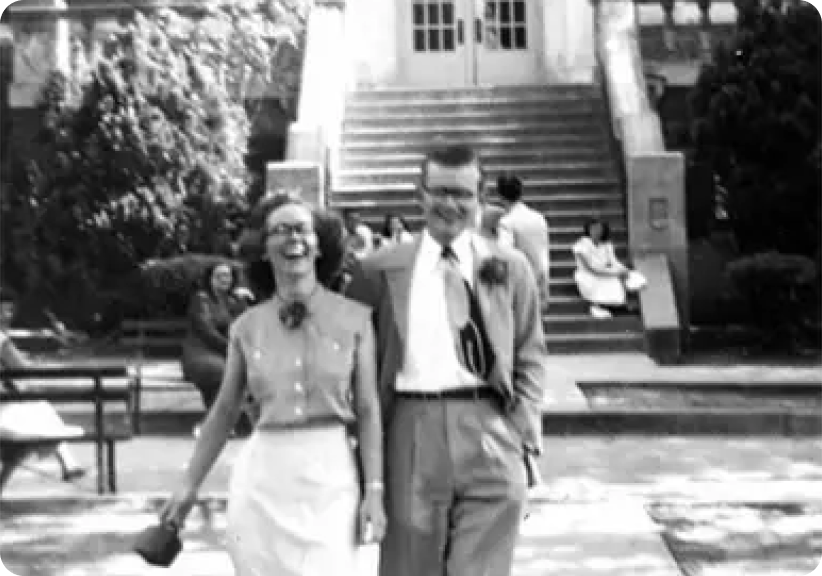
Lloyd and Margie Lee Bridges begin their careers in the printing industry and raise their children in an all-deaf family.
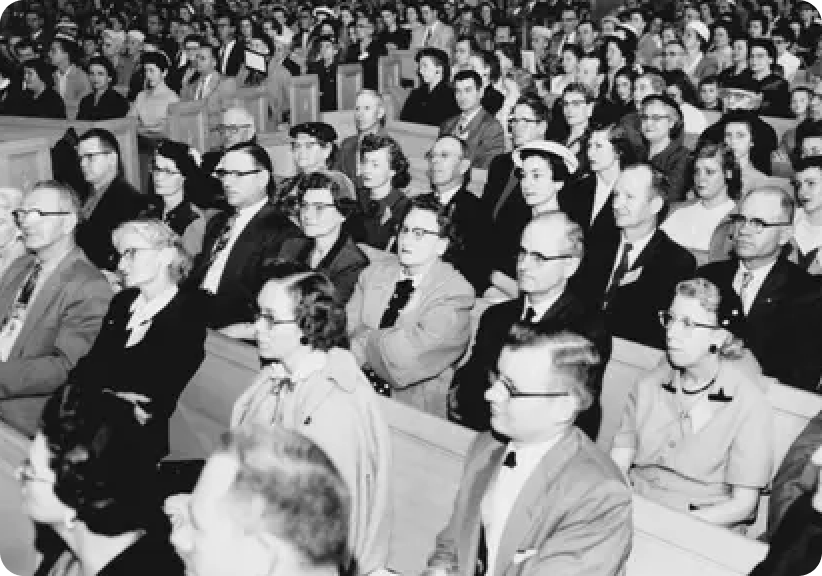
Involvement in church service, first steps in training others to become sign language interpreters.
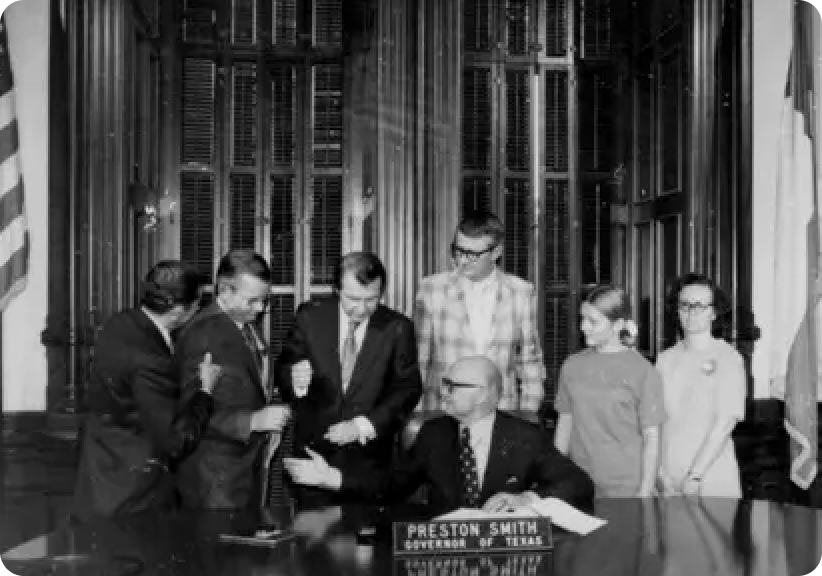
Signing of HB 1293. The Texas Commission for the Deaf is established. (Photo with Governor Preston Smith).
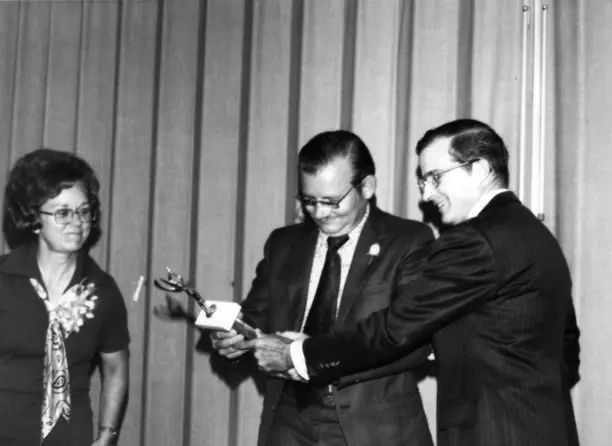
Expansion of the community, participation in organizations, promotion of access to education and services.
SUPPORT
Frequently Asked Questions
Quick answers to common questions about all of our services.
Who is required to pay for interpreting services?
The business, healthcare provider, employer, or organization is required to pay for ASL interpreting services, not the Deaf individual.
The legal requirement: Under the Americans with Disabilities Act (ADA), Title II entities (state and local governments) and Title III entities (businesses and nonprofits serving the public) must provide and pay for interpreters to ensure effective communication with people who are Deaf or hard of hearing.
What this means in practice: The cost of interpreting services is considered a cost of doing business, similar to other operational expenses. As a covered entity, you cannot:
- Charge the Deaf individual for the interpreter
- Require them to bring their own interpreter
- Use the cost as a reason to deny services
Why it matters: Beyond legal compliance, providing qualified interpreters ensures that every Deaf or hard of hearing person who interacts with your business has equal access to communication.
What is the ADA and how does it apply to sign language interpreters?
The Americans with Disabilities Act (ADA) is a federal civil rights law that prohibits discrimination against people with disabilities. Under the ADA, businesses, healthcare providers, employers, schools, and government agencies must provide “effective communication” with individuals who are Deaf or hard of hearing.
This typically means providing a qualified sign language interpreter or CART (real-time captioning) services or both when needed for effective communication. The ADA applies to medical appointments, legal proceedings, employment situations, educational settings, and any public accommodation where communication is necessary.
What areas does 3 Bridges Sign Language Services serve?
3 Bridges Sign Language Services is headquartered in Austin, Texas and provides ASL interpreting services throughout Central Texas and nationwide. We regularly serve Austin and the surrounding areas including Leander, Cedar Park, Liberty Hill, Marble Falls, Georgetown, Round Rock, Pflugerville, Hutto, Manor, Bastrop, Kyle, Buda, San Marcos, San Antonio.
We have a network of qualified interpreters across the country and can arrange interpreting services in any U.S. location. VRI (Video Remote Interpreting) and CART services are available anywhere in the United States with internet access.
Why does my company need to provide an interpreter(s)?
Your company needs to provide interpreters for several important reasons:
- Legal Compliance: The Americans with Disabilities Act (ADA) mandates that businesses ensure effective communication with individuals who have communication disabilities.
- Inclusivity: Access to communication is a fundamental right for all individuals, including those who are Deaf or hard of hearing.
- Enhanced Communication: Interpreters facilitate clear and accurate communication, reducing the risk of misunderstandings or miscommunications.
- Customer Satisfaction: Providing interpreters demonstrates a commitment to meeting the diverse needs of your customers, enhancing loyalty and respect.
- Legal Protection: Failing to provide appropriate accommodations can lead to discrimination lawsuits and legal liabilities.
When do I need to provide an interpreter?
You may need to provide an interpreter in various situations, including:
- Meetings and Conferences: Any gathering where individuals who are Deaf or hard of hearing need to participate and understand the information being conveyed.
- Medical Appointments: Effective communication between healthcare providers and patients who use sign language is essential for accurate diagnosis and treatment.
- Legal Proceedings: Providing interpreters in courtrooms or during legal consultations ensures that individuals who are Deaf or hard of hearing can fully participate. Sign language interpreters in the courtroom must obtain a higher level of certification.
- Educational Settings: Interpreters are necessary in classrooms and academic settings to facilitate communication between students, teachers, and staff.
- Business Interactions: Whether it’s a job interview, training session, performance review, or customer service interaction, providing interpreters ensures that individuals who are Deaf or hard of hearing can fully engage.
In general, providing an interpreter is necessary if communication is essential for the full and equal participation of individuals who use sign language. Contact us for guidance on whether an interpreter is required for a specific situation.
How do I request an ASL interpreter from 3 Bridges SLS?
Submit your request through the 3 Bridges ASL Interpreter Request Form on our website. Include the date, time, location, type of assignment, expected duration, and any specific requirements or preferences.
Once we receive your request, we’ll process it and send a confirmation email with all details. The confirmation email includes a cancellation link if you need to make changes. We recommend booking as far in advance as possible, at least one to two weeks for routine appointments and four to six weeks for conferences or specialized settings.
What certifications do your ASL interpreters have?
All 3 Bridges interpreters are highly qualified, with most holding national certification through the Registry of Interpreters for the Deaf (RID) or state certification through the Texas Board for Evaluation of Interpreters (BEI). These certifications require passing rigorous exams in ASL fluency, interpreting skills, ethics, and Deaf culture.
Due to industry-wide factors such as limited testing availability, some interpreters are still working toward certification. Every interpreter we assign is thoroughly vetted to meet our standards for skill, experience, and professionalism.
For legal and court settings, we provide interpreters with specialized BEI Court Certification as required by Texas law. Our interpreters maintain their qualifications through ongoing professional development, self-study, mentorship, and active participation in the Deaf community.
How far in advance should I book an ASL interpreter?
Book as far in advance as possible. We recommend at least one to two weeks notice for routine appointments and four to six weeks for conferences, large events, or specialized settings (legal, medical specialty, mental health). Interpreters are in high demand, and scheduling can become challenging when requests exceed available supply.
However, we understand that urgent needs arise. We accept same day and urgent requests with a $30 surcharge for requests made with less than 24 hours notice. Contact us immediately if you have an urgent need and we’ll do our best to accommodate your request.
What is the cancellation policy for ASL interpreting services?
Cancellations made with more than 24 hours notice incur no charge. Cancellations made with less than 24 hours notice are charged for the full scheduled time or the two hour minimum, whichever is greater. This policy exists because interpreters reserve their time for your appointment and may have turned down other work.
Cancellations must be made online through the 3 Bridges cancellation page or by clicking the “Cancel Interpreter” link in your confirmation email. Cancellations cannot be made by phone or email.
Why do some assignments require two ASL interpreters?
Interpreting is cognitively and physically demanding work. Research shows interpreter accuracy declines significantly after 20 to 30 minutes of continuous interpreting. Additionally, sign language interpreters are prone to repetitive motion injuries from the physical demands of signing.
To maintain accuracy and prevent injuries, assignments longer than one to 1.5 hours typically require two interpreters working in 15 to 20 minute shifts. Team interpreting is also standard for legal proceedings, medical consultations, mental health appointments, and conferences regardless of duration due to the complexity and high stakes of these settings. The determination for team interpreting is made at the time of booking.
Can I request a specific ASL interpreter?
Yes, you can request specific ASL interpreters when scheduling services. We understand that individuals may have preferences based on past experiences, comfort level, or personal connections. When making a request, please provide the name of the interpreter you would like to work with.
While we strive to accommodate requests for specific interpreters whenever possible, availability may vary depending on scheduling and other factors. If your preferred interpreter is unavailable, we will work with you to identify an alternative interpreter who meets your needs and preferences.
What is Video Remote Interpreting (VRI)?
Video Remote Interpreting (VRI) connects you with a qualified ASL interpreter via secure video technology on a computer, tablet, or smartphone. The interpreter joins remotely while the Deaf and hearing individuals are in the same physical location, enabling real-time interpretation without an on-site ASL interpreter.
VRI is useful when an on-site ASL interpreter isn’t available on short notice, for shorter appointments, or for locations where onsite interpreters are scarce. 3 Bridges VRI services are HIPAA compliant and suitable for healthcare settings.
When should I use VRI vs. an on-site interpreter?
On-site ASL interpreting is preferred for: appointments longer than 1 hour, complex medical procedures or consultations, mental health and therapy sessions, legal proceedings, situations with multiple Deaf individuals, settings with poor technology infrastructure, and whenever the Deaf individual requests on-site services.
VRI works well for: shorter routine appointments (under 1 hour), situations where on-site interpreters aren’t available, telehealth appointments, urgent/same-day needs, and locations with reliable high-speed internet. Always defer to the Deaf individual’s preference when possible.
What equipment do I need for VRI?
Internet: A dedicated high speed broadband connection (wired Ethernet preferred). Internet speeds should be at least 1.5 Mbps minimum (up and down), with 3-5 Mbps recommended for reliable HD quality.
Hardware: A laptop, desktop, or tablet supporting HD video (720p or higher at 30 frames per second). The screen must be large enough for the Deaf individual to clearly see the interpreter.
Environment: Good lighting on all participants (no backlighting), a quiet environment with minimal background noise, and backup equipment or mobile hotspot in case of technical issues. Trained personnel should be available to set up and troubleshoot VRI promptly.
Who will provide the video link for VRI?
3 Bridges can provide the business or organization with a video link for the scheduled assignment. We use secure, HIPAA compliant video platforms.
Alternatively, if you already have a video meeting scheduled (Zoom, Microsoft Teams, Webex, etc.), you can share that link with us and we’ll pass it along to the ASL interpreter. Let us know your preference when booking.
When is VRI not appropriate?
VRI may not be appropriate in several situations:
- Emergency or trauma situations where the patient is in distress
- Complex medical procedures where the patient cannot view a screen
- Mental health appointments requiring the rapport of an onsite interpreter
- Locations with poor technology infrastructure or unreliable internet
- Settings with multiple Deaf individuals
- When the Deaf individual has specialized language needs or requires a Certified Deaf Interpreter (CDI)
- When the Deaf individual prefers or requests onsite services
3 Bridges can help determine whether VRI or onsite interpreting is most appropriate for your situation at the time of booking.
Check out our VRI Guidelines.
Do you provide court certified ASL interpreters in Texas?
Yes, 3 Bridges provides BEI Court Certified interpreters for all legal and court proceedings in Texas. Texas law requires interpreters working in court settings to hold BEI Court Certification, which involves additional specialized testing beyond standard interpreter certification.
Our court certified interpreters are qualified for trials, hearings, arraignments, depositions, mediations, arbitrations, and any on-the-record legal proceeding where interpretation becomes part of the official court record.
What is the difference between legal rates and court rates?
Court Rates apply to on-the-record proceedings where interpretation becomes part of the official record and Texas law requires BEI Court Certified interpreters. This includes trials, hearings, depositions, mediations, law enforcement interviews, and recorded proceedings.
Legal Rates apply to off-the-record settings such as attorney-client meetings, case preparation, document review, and consultations. 3 Bridges confirms the appropriate rate based on the details you provide when booking.
What types of legal settings do you provide interpreters for?
We provide qualified legal sign language interpreters, both virtually and in person for the following: court hearings and trials, jury duty, depositions, attorney / client meetings and consultations, mediations, arbitrations, law enforcement interviews and interrogations, parole and probation hearings, immigration proceedings, family court matters and any other legal setting which requires communication access for the client.
Our legal interpreters understand courtroom protocol, legal terminology, attorney client privilege, and the ethical requirements specific to legal interpreting.
Who pays for the interpreter in legal proceedings?
In criminal proceedings, the court typically pays for the interpreter. In civil cases, the party responsible depends on the jurisdiction and circumstances. Attorneys representing Deaf clients may be able to seek reimbursement through the State Bar of Texas Communication Access Fund.
For attorney-client consultations and case preparation, the law firm or attorney typically covers interpreter costs as part of representing their client. We recommend discussing interpreter arrangements early in the representation.
Contact us if you have questions about responsibility for interpreter costs in your specific situation.
How should I prepare for a legal proceeding with an ASL interpreter?
Provide the interpreter with relevant materials in advance: case summaries, witness lists, technical terminology, names of parties involved, and any documents that will be referenced. This preparation significantly improves interpretation accuracy.
Position the interpreter where the Deaf individual can see both the interpreter and the speaker (judge, attorney, witness). Speak at a moderate pace, pause between speakers, and address the Deaf individual directly (not “tell him/her”). Allow extra time for the interpretation process.
For depositions and trials, consider scheduling a brief meeting between the interpreter and the Deaf client beforehand to establish communication preferences.
What is CART and who uses it?
CART (Communication Access Realtime Translation) is a service where a trained professional converts spoken language into text displayed on a screen in realtime with 98%+ accuracy. CART providers use specialized stenotype equipment to capture speech as quickly as it is spoken.
CART is used by people who are Deaf or hard of hearing and prefer reading English over sign language, individuals with cochlear implants, late-deafened adults, and people with auditory processing disorders.
Why should I use CART instead of automatic captions?
Accuracy that matters: CART delivers 98-99% accuracy compared to auto-captions’ 60-80%. That 20-40% difference isn’t just numbers. It’s missed medication instructions, misunderstood legal rights, or lost educational content.
Auto-captions fail when it counts: They struggle with accents, technical terminology, multiple speakers, background noise, and crosstalk. A single misheard word can change “take two pills” to “take ten pills” or turn a “not guilty” into something else entirely.
CART captures the full picture: A trained CART provider identifies speakers, notes tone and emotion, and includes environmental sounds like “[laughter]” or “[applause]” that give context to the conversation.
Legal compliance: The ADA requires “effective communication.” In many professional settings, auto-captions do not meet this standard. CART is the recognized accommodation for education, healthcare, legal proceedings, and workplace communication.
Who can benefit from using CART?
CART benefits many individuals:
- Deaf and hard of hearing individuals who prefer reading English over sign language
- Late-deafened adults who may not know sign language
- Cochlear implant users who benefit from text support
- People with auditory processing disorders
- Non-native English speakers who find reading easier than listening
CART is commonly used in educational institutions, workplaces, conferences, medical appointments, legal proceedings, and public meetings.
What are the technical requirements for CART?
For onsite CART: You need display equipment such as a laptop, monitor, or projector screen where the text can be displayed for the individual to read.
For remote CART: Participants need a stable internet connection and a device with a screen to view captions. The CART provider must be able to hear the audio clearly, which may require high quality microphones or a direct audio feed.
Text display settings can be adjusted for individual visual preferences including font size, color, and contrast.
Is CART covered under the ADA?
Yes. The Americans with Disabilities Act requires public facilities, employers, educational institutions, and healthcare providers to provide reasonable accommodations for effective communication with people who are Deaf or hard of hearing. CART is a recognized accommodation under the ADA.
Organizations cannot deny CART services based on cost alone. If a Deaf or hard of hearing individual requests CART as their accommodation, the organization is generally required to provide it, just as they would be required to provide an ASL interpreter.
What is ASL video production?
ASL video production is the process of translating spoken or written content into American Sign Language (ASL) and presenting that information through professionally produced video.
These videos typically feature a Deaf presenter or qualified ASL interpreter signing the content on screen so Deaf and hard of hearing viewers can access the content in a visual language. ASL video production may be used to translate existing videos or to create new video content specifically designed for Deaf audiences.
Organizations often use ASL video production to make training materials, educational content, public announcements, healthcare information, and website content more accessible.
Contact us to learn how ASL video production can make your organization’s content accessible.
Why is ASL important for video accessibility for Deaf and hard of hearing audiences?
Many Deaf individuals use American Sign Language as their primary language, and written English may not always provide the same level of clarity as sign language.
Captions provide access to spoken audio through written text, but they do not always fully convey tone, emotion, or complex information for viewers whose primary language is ASL. This is especially true for children or individuals who may still be developing English literacy skills.
ASL interpretation or translation allows Deaf viewers to receive information through their natural language. For this reason, many organizations now provide both captions and ASL interpretation to create a more complete and inclusive media experience.
What types of content can be translated into ASL videos?
A wide variety of media content can be translated into American Sign Language and presented through video.
Common examples include:
- educational course materials
- employee training and onboarding videos
- healthcare and medical information
- public service announcements
- corporate communications
- marketing and promotional videos
- website welcome messages
- government announcements
- conference presentations or webinars
- movies and television content
- streaming and digital media productions
ASL interpretation or translation may be incorporated during production or added during post-production through video overlay. This approach allows media creators to make their content accessible to Deaf audiences while maintaining the original visual storytelling.
What is the difference between captions and ASL interpretation?
Captions convert spoken audio into written text displayed on the screen.
ASL interpretation presents the message through visual sign language performed by a signer.
These two forms of accessibility serve different communication needs. Captions support viewers who cannot hear the audio but are comfortable reading English. ASL interpretation supports individuals whose primary language is American Sign Language, which has a different grammar and structure than English.
For many organizations, providing both captions and ASL interpretation creates the most inclusive viewing experience.
Who performs the ASL in the video?
Most of our ASL video productions feature Deaf talent who are native users of American Sign Language, including professional Deaf actors and actresses and Certified Deaf Interpreters (CDIs) who communicate the message directly in ASL.
Our production team includes Deaf talent who are actors and actresses, Deaf ASL language specialists who serve as consultants, Certified Deaf Interpreters (CDIs), and video production specialists who work together to ensure the translation is accurate and the signing is visually clear for Deaf audiences.
This collaborative process helps ensure the final video reflects both the meaning of the original content and natural ASL communication.
We take pride in working with highly experienced Deaf talent, many of whom have appeared in major productions such as the Super Bowl, Netflix, HBO, and many other productions, bringing a high level of professionalism and authenticity to ASL accessible media.
Why is there a two hour minimum for on-site interpreting?
In accordance with industry standards, our interpreting services include a two hour minimum charge for every request.
How is the two hour minimum structured? The initial hour covers the actual interpreting services, while the subsequent hour encompasses administrative tasks and travel expenses.
How are services billed beyond the two hour minimum? For each assignment, billing starts with at least one hour of interpreting plus the admin/travel fee. Additional services are billed in 15 minute increments. If interpreters are dismissed early, charges will be based on the full scheduled time or the two hour minimum, whichever is greater.
How is the admin/travel time determined? The admin/travel time is based on the distance from Austin/Travis County to the assignment location. The rates are as follows:
- For locations within Austin/Travis County: 1 hour of admin/travel time (with a 2 hour minimum)
- For locations in Kyle, Buda, Cedar Park, Lakeway, and Georgetown: 1.5 hours of admin/travel time (with a 2.5 hour minimum)
- For locations in Bastrop, San Marcos, and Marble Falls: 2 hours of admin/travel time (with a 3 hour minimum)
Rates for locations not listed above will be determined when booking.
What do new clients need to do before scheduling services?
Before scheduling, new clients are required to sign our Rates and Policies form for the service they are requesting. This form outlines our rates, minimum requirements, cancellation policy, payment terms, and other important policies.
Once we receive your signed form, you’ll be set up in our system and can begin booking services. This is a one time process, and returning clients do not need to complete it again. If our rates or policies change, we will email current clients with the updates so they do not have to sign new paperwork.
What payment methods do you accept?
We accept ACH bank transfers (preferred), mailed checks, and credit cards. Credit card payments over $2,000 incur a 3% processing fee. You’ll receive an invoice via email shortly after your assignment is completed.
Payment is due upon receipt. 3 Bridges is a Net 30 company. Invoices not paid within 30 days incur a late fee of $50 or 10% of the balance (whichever is greater) every 30 days.
These payment terms apply to all 3 Bridges services.
Why was I charged a late fee?
3 Bridges is a Net 30 company, meaning payment is due within 30 days of the invoice date. Invoices not paid within 30 days incur a late fee of $50 or 10% of the balance, whichever is greater. This fee is applied every 30 days until the balance is paid in full.
As a locally based agency, 3 Bridges relies on prompt customer payments to ensure smooth operations and timely compensation for our professionals. To avoid late fees, we recommend setting up ACH bank transfers for automatic payment or paying promptly upon receipt of your invoice.
Why was I billed even though the appointment was cancelled?
Cancellations made with less than 24 hours notice are charged for the full scheduled time or the two hour minimum, whichever is greater. This policy exists because interpreters reserve their time for your appointment and may have turned down other work.
Cancellations must be made online through the 3 Bridges cancellation page or by clicking the “Cancel Interpreter” link in your confirmation email. Cancellations cannot be made by phone or email. To avoid cancellation charges, please provide at least 24 hours notice when possible.
How many interpreters do I need for a conference or large event?
Most conferences and events lasting more than one to two hours require a team of 2 or more interpreters who rotate every 15 to 20 minutes to maintain accuracy and prevent fatigue. For multiday conferences or events with concurrent sessions, you may need additional interpreter teams.
Contact us with your event details (schedule, number of sessions, content complexity, number of Deaf attendees) and we’ll recommend the appropriate staffing. Conference interpreting incurs an additional $10/hour per interpreter.
Where should the ASL interpreter be positioned for a stage presentation?
Position the interpreter where Deaf attendees can see both the interpreter and the presenter/screen without turning their head significantly. Typically this means stage left or right, elevated if needed, with dedicated lighting on the interpreter.
Key considerations: The interpreter needs a clear view of the presenter, good lighting (no backlighting or shadows on face/hands), visibility from Deaf seating areas, and minimal visual distractions behind them. Reserve front-row seating for Deaf attendees near the interpreter.
How far in advance should I book interpreters for a conference?
Book conference interpreters four to six weeks in advance minimum. For large events, specialized content (medical, legal, technical), or peak seasons, book 2-3 months ahead. This ensures availability of qualified interpreters familiar with your subject matter.
Provide presenters’ materials, agendas, technical terminology, and speaker names in advance so interpreters can prepare. Preparation significantly improves interpretation quality for specialized content.
Do you provide interpreters for virtual and hybrid events?
Yes. We provide interpreters for in person, virtual, and hybrid events. For virtual events, interpreters can appear in a separate video window, picture-in-picture, or spotlight view depending on your platform. For hybrid events, we can provide onsite interpreters, remote interpreters, or both.
We work with all major platforms including Zoom, Microsoft Teams, Webex, and streaming services. Contact us early to discuss technical requirements and ensure smooth integration.
What preparation materials should I provide for conference interpreters?
Provide interpreters with:
- Event agenda and schedule
- Presenter names and bios
- Presentation slides or outlines
- Technical terminology and acronyms specific to your industry
- Names of products, companies, or people that will be mentioned
- Any pre-recorded content that will be shown
Materials should be provided at least 3-5 days before the event. The more context interpreters have, the more accurate and seamless the interpretation will be for your Deaf attendees.
Need More Help?
Explore our complete FAQ or reach out to our team for personalized assistance.