
Video Remote Interpreting
Connect with a Certified ASL Interpreter Anywhere, Anytime
3 Bridges provides Video Remote Interpreting with RID and BEI certified ASL interpreters, available 24/7 nationwide across all 50 states. No special software or app downloads required — just connect through your existing video platform.
HIPAA COMPLIANT
ADA COMPLIANT
100% CERTIFIED
SECTION 504
ALL 50 STATES
What is VRI?
What Is Video Remote Interpreting (VRI)?
Certified ASL Interpreting, Available Nationwide
Video Remote Interpreting (VRI) connects you with a certified ASL interpreter through live video when an on-site interpreter isn’t immediately available. Our RID and BEI certified interpreters join your existing video platform — Zoom, Microsoft Teams, Google Meet, WebEx, or any other — to provide real-time American Sign Language interpreting for Deaf and hard-of-hearing individuals. 3 Bridges delivers VRI services across all 50 states, 24 hours a day, 7 days a week.
Unlike VRS (Video Relay Service), which is a free phone-based service for Deaf individuals, VRI is a professional communication accommodation provided by hospitals, businesses, schools, courts, and government agencies nationwide. Organizations use Video Remote Interpreting to meet ADA, HIPAA, and Section 504 compliance requirements while ensuring effective communication access during medical appointments, legal proceedings, workplace meetings, IEP conferences, and virtual events.

WHY CHOOSE VRI?
Benefits of Video Remote Interpreting
VRI offers flexibility, cost savings, and immediate accessibility for organizations of all sizes, anywhere in the United States.

Cost Effective
No travel time, mileage charges, or parking fees, pay only for interpreting time

Rapid Access
Connect with interpreters quickly, even for short-notice or same-day requests

Certified Quality
All interpreters hold RID national and BEI Texas state certifications

Nationwide Reach
Access interpreters in all 50 states from a single trusted provider
On Your Schedule
Same day and short notice requests welcome, including evenings and weekends
Any Device
Works on computers, laptops, tablets, or smartphones with a camera
Fully Compliant
Meets HIPAA, ADA, and Section 504 requirements for communication access

Specialized
Medical, legal, educational, and technical interpreters matched to your needs
GETTING STARTED
How VRI Works
From request to connection in four simple steps.
1
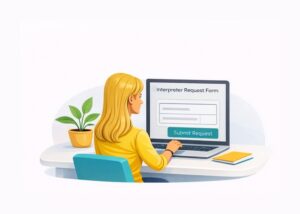
Submit a Request
New customers complete our Rates & Policies form. Existing customers use the Interpreter Request form.
2

We Match Your Interpreter
3 Bridges matches your assignment with a certified interpreter based on skill level, topic, and Deaf preference.
3
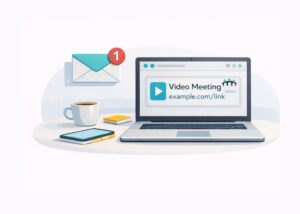
Share or Receive a Link
We send you a meeting link, or your interpreter joins your existing video platform. No special software needed.
4
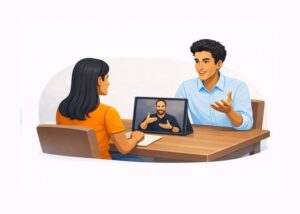
Connect & Communicate
Join the video call. The interpreter facilitates full dialogue between Deaf and hearing participants.
WHO WE SERVE
Industries We Serve
3 Bridges provides VRI services for organizations across all industries throughout the United States.
🏥
Healthcare & Telehealth
Hospitals, clinics, telehealth platforms, mental health services, emergency rooms, and patient consultations. HIPAA compliant for all medical settings.
💼
Business & Corporate
Team meetings, HR consultations, employee accommodations, training sessions, job interviews, and workplace accessibility compliance.
🎓
Education (K-12 & Higher)
Virtual classrooms, parent-teacher conferences, IEP meetings, university lectures, tutoring sessions, and campus events.
🏛️
Government & Public Sector
Federal, state, and local agencies, public meetings, social services, administrative hearings, and Section 504 compliance.
⚖️
Legal Services
Attorney-client meetings, depositions, legal consultations, and administrative proceedings. Court-certified interpreters available.
🎤
Events & Conferences
Webinars, conferences, online presentations, town halls, and live-streamed events with real time interpretation.
PLATFORM CAPABILITY
Works With Any Platform
Our interpreters join your existing video meeting — no downloads, no installs, no proprietary software.




Zoom
Microsoft Teams

Google Meet

Webex
GoToMeeting
Google Classroom
✓ Any Video Platform — No proprietary app or software required, ever.
BEST PRACTICES
Tips for Effective VRI Sessions
Follow these best practices to get the most out of your VRI experience.
Speak Directly to the Deaf Individual
Look at and address the Deaf person, not the interpreter. Use “you” instead of “he/she/they as you speaking directly to the Deaf individual(s).
Ensure Proper Lighting
Position the camera with good lighting on the Deaf individual. They need to clearly see the interpreter’s face, hands, and facial expressions.
Use a Stable Internet Connection
A wired connection or strong WiFi (minimum 3+ Mbps) ensures smooth, uninterrupted communication.
Position the Screen Properly
Place the screen where the Deaf individual can easily see the interpreter without straining. Eye-level positioning works best.
Speak at a Natural Pace
Speak naturally but allow brief pauses. The interpreter may need a moment to convey complex information accurately.
Test Your Setup in Advance
Check your camera, microphone, speakers, and internet connection before the session begins.
📘 For detailed setup instructions and session best practices, visit our VRI Guidelines →
COMMON ASL INTERPRETING QUESTIONS
ASL Interpreting FAQs
How do I request an ASL interpreter from 3 Bridges?
Submit your request through the 3 Bridges ASL Interpreter Request Form on our website. Include the date, time, location, type of assignment, expected duration, and any specific requirements or preferences.
Once we receive your request, we’ll process it and send a confirmation email with all details. The confirmation email includes a cancellation link if you need to make changes. We recommend booking as far in advance as possible, at least one to two weeks for routine appointments and four to six weeks for conferences or specialized settings.
What certifications do your ASL interpreters have?
All 3 Bridges interpreters hold national or state certification through the Registry of Interpreters for the Deaf (RID) or the Texas Board for Evaluation of Interpreters (BEI). These certifications require passing rigorous exams covering ASL fluency, interpreting skills, ethics, and Deaf culture.
For legal and court settings, we provide interpreters with specialized BEI Court Certification as required by Texas law. Our interpreters maintain their certifications through ongoing professional development, self-study, mentorship, and active participation in the Deaf community.
How far in advance should I book an ASL interpreter?
Book as far in advance as possible. We recommend at least one to two weeks notice for routine appointments and four to six weeks for conferences, large events, or specialized settings (legal, medical specialty, mental health). Interpreters are in high demand, and scheduling can become challenging when requests exceed available supply.
However, we understand that urgent needs arise. We accept same day and urgent requests with a $30 surcharge for requests made with less than 24 hours notice. Contact us immediately if you have an urgent need and we’ll do our best to accommodate your request.
What is the cancellation policy for interpreter services?
Cancellations made with more than 24 hours notice incur no charge. Cancellations made with less than 24 hours notice are charged for the full scheduled time or the two hour minimum, whichever is greater. This policy exists because interpreters reserve their time for your appointment and may have turned down other work.
Cancellations must be made online through the 3 Bridges cancellation page or by clicking the “Cancel Interpreter” link in your confirmation email. Cancellations cannot be made by phone or email.
Why do some assignments require two interpreters?
Interpreting is cognitively and physically demanding work. Research shows interpreter accuracy declines significantly after 20 to 30 minutes of continuous interpreting. Additionally, sign language interpreters are prone to repetitive motion injuries from the physical demands of signing.
To maintain accuracy and prevent injuries, assignments longer than one to 1.5 hours typically require two interpreters working in 15 to 20 minute shifts. Team interpreting is also standard for legal proceedings, medical consultations, mental health appointments, and conferences regardless of duration due to the complexity and high stakes of these settings. The determination for team interpreting is made at the time of booking.
Can I request a specific interpreter?
Yes, you can request specific ASL interpreters when scheduling services. We understand that individuals may have preferences based on past experiences, comfort level, or personal connections. When making a request, please provide the name of the interpreter you would like to work with.
While we strive to accommodate requests for specific interpreters whenever possible, availability may vary depending on scheduling and other factors. If your preferred interpreter is unavailable, we will work with you to identify an alternative interpreter who meets your needs and preferences.
How do I use an interpreter as a hearing person?
Positioning: Position yourself where the Deaf individual has a clear view of both you and the interpreter. Maintain eye contact with the Deaf person while the interpreter is signing.
Communication: Speak directly to the Deaf individual, not to the interpreter. Say “How are you feeling today?” rather than “Ask her how she’s feeling.” Speak at a normal pace and volume.
Preparation: Provide materials in advance (agendas, documents, specialized vocabulary) to help interpreters prepare and deliver more accurate interpretation.
Clarifications: If you’re unsure about any aspect of the communication, don’t hesitate to ask the interpreter for assistance.
What types of sign language can your interpreters use?
Our interpreters primarily work in American Sign Language (ASL), which is the predominant sign language used by Deaf communities in the United States. Some interpreters are also skilled in Signed English, Pidgin Signed English (PSE), and other communication modalities.
For Deaf individuals who use foreign sign languages or have unique communication needs, we can often arrange for Certified Deaf Interpreters (CDIs) or interpreters with specific language skills. Let us know your needs when booking so we can match you with the appropriate interpreter.
Do you provide emergency or after-hours interpreter services?
Yes, we understand that communication needs don’t always occur during regular business hours. We accept urgent and same day requests and will do our best to accommodate emergency situations. A $30 surcharge applies for same day and urgent requests.
For after-hours emergencies, VRI (Video Remote Interpreting) may be available more quickly than onsite interpreters. Contact us as soon as you become aware of an urgent need and we will work to find a solution.
Why is it important to provide preparation materials to interpreters?
Providing preparation materials significantly improves interpretation quality. Materials such as agendas, presentations, technical terminology, acronyms, and speaker names help interpreters familiarize themselves with content before the assignment.
Interpreters who can prepare in advance deliver more accurate, fluent interpretation and can research specialized vocabulary they may encounter. We recommend sending materials 3-5 days before your assignment whenever possible. The more preparation materials you provide, the higher quality interpretation your Deaf participants will receive.
What should I do to prepare for an onsite interpreter?
To prepare for an onsite interpreter:
- Send any preparation materials (agendas, slides, vocabulary) in advance
- Arrange seating so the Deaf individual can see both the interpreter and the speaker
- Ensure good lighting on the interpreter (no backlighting)
- Brief the interpreter on the setting and any sensitive topics
- Plan for breaks during long assignments
- Have water available for the interpreter
If you have questions about logistics, contact us before the assignment and we’ll help you prepare.
Will the interpreter sign everything I say?
Yes, interpreters are ethically bound to interpret everything that is said, including side conversations, background comments, and environmental sounds that may be relevant. This ensures the Deaf individual has the same access to information as hearing participants.
If you need to have a private conversation that should not be interpreted, step away from the interpreted setting. Similarly, interpreters will voice everything the Deaf individual signs. The interpreter’s role is to facilitate complete, accurate, and impartial communication between all parties.
Need More Help?
Explore Our Full FAQ
Our full FAQ page covers interpreting, billing, scheduling, legal services, and more.
Ready to Connect with a Certified ASL Interpreter?
3 Bridges provides Video Remote Interpreting services 24/7, nationwide across the United States.